What Are Dental Implants?
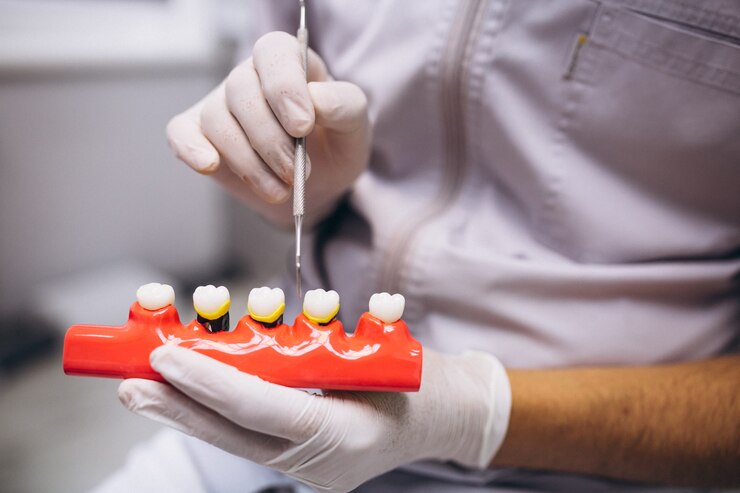
Dental implants are titanium posts which are surgically placed in the jawbone under the gumline. These posts serve as a substitute tooth root. A replacement tooth is then mounted onto the post with an abutment.
Often times, dental implants are the best option to replace missing teeth. They are the closest you can get to natural teeth. The color of the dental implant tooth is coordinated with your existing teeth for the perfect match.
Tooth Implant
One implant and crown can replace a single missing tooth. A tooth implant will replace both the root and missing tooth crown. A tooth implant has advantages over other replacement alternatives.
What Are The Advantages of a Single-Tooth Implant Over a Bridge?
- It functions and looks like a real tooth.
- The health of surrounding teeth is not sacrificed, like it is with a bridge.
- The integrity of the jawbone is preserved.
- A tooth implant is easier to keep clean than a bridge.
- The gums around the tooth implant do not recede.
Stages of Dental Implant Procedures
Today, there are many options available for dental implants ranging from many different materials used to the multiple manufacturers who make them. Your doctor will choose the proper treatment for your specific needs. Keep in mind that if you see a different doctor for a repair later on, they may not have the same material components available that your other doctor had.
The type of dental implant procedure is used to categorize them: single-stage and two-stage implants.
Single-Stage Dental Implants. During this procedure, a longer implant is surgically placed into the jaw so it sits on the jawbone, level with the gumline. When the gums are stitched closed, the head of the implant is visible. Because of this, there is no need for another surgery to expose the head because the abutment can be attached directly to the implant, after several months of healing.
Two-Stage Implants. During a two-stage implant procedure, the implant is placed into the jaw and the gums are stitched together. Months later, the abutment is attached to the implant during a minor surgical procedure.
Types of Dental Implants
Endosteal (Endosseous) Implants: This type of implant is the most common for the two-stage procedure. It includes blade types, cylinder (smooth) types and screw (threaded) types. Endosteals are usually placed as a removable denture or bridge alternative.
Subperiosteal Implants: This type of implant is the most common for the single-stage procedure. The subperiosteal is placed on the jawbone with the implant post exposed from the gum tissue. These are most often used for patients with insufficient bone height or are used to hold dentures.
Dental Implant Cost
How much do dental implants cost ?
The price for a single tooth implant ranges from about $1,000 to $3,000. The crown and abutment can range anywhere from $500 to $3,000. On average, the total cost of a single dental implant is usually from $1,500 to $6,000. The total cost may be even higher depending on your case.
Keep in mind, other factors can effect the cost. There are different types of implants and depending on how many teeth you need to replace, the cost can increase.
Dental Implants Procedure
During the dental implant procedure, the doctor will surgically place an implant in the jawbone. Over time, this implant will integrate with the bone and act as a replacement root for the crown. The crown is made to match the color of your existing teeth and will attach to the implant with an abutment.
For the procedure to be successful, the patient must have sufficient bone in their jaw. It must be strong enough to support and hold the implant. If the patient is lacking enough bone, they may need bone grafting, also referred to as bone augmentation. The supporting gum tissue and surrounding teeth where the implant is to be placed also must be healthy.
Dental Implants Surgery
Dental implant surgery is usually an outpatient surgery performed in stages:
Performed in stages, the dental implant surgery is an outpatient procedure. Here is an example of the stages of dental implant surgery:
- The bad tooth is extracted.
- If necessary, bone grafting is performed to prepare the jawbone for the implant.
- The implant post is placed in the jawbone after it heals (if grafting was needed).
- Several months are needed for the implant to fuse to the bone.
- The abutment is placed, which is what connects the post to the crown.
- When the gums have healed, molds are made of your jawbone and teeth.
- The artificial crown in placed.